In my pediatric practice, I see a lot of “new baby anxiety,” often triggered by a sudden breakout on a baby’s face. Parents often rush for over-the-counter eczema creams, but if the issue is actually baby acne, those heavy ointments can sometimes make the bumps stick around longer.
Distinguishing between baby acne and eczema is vital because their causes and the level of professional care required are complete opposites. One is a hormonal “rite of passage,” while the other is an inflammatory signal from the immune system.
Explore Our Eczema Creams Guide To Find The Right Treatment for You
The Visual Guide: Spotting the Difference
- Baby Acne (Neonatal Acne)
- Timing: Typically shows up around 2 to 4 weeks of age.
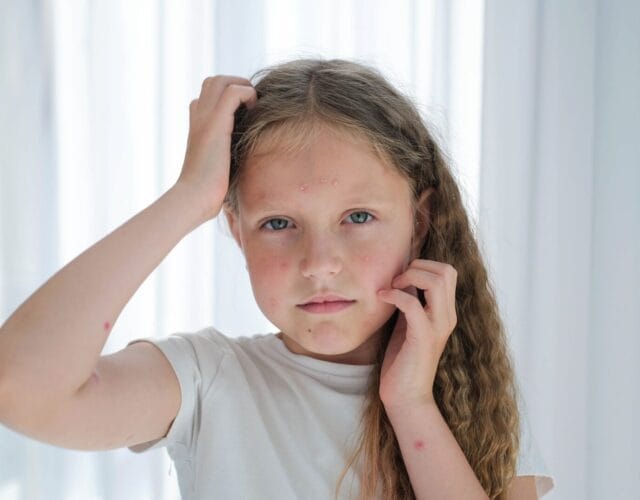
- Appearance: Small red bumps or whiteheads (pustules) that look like “pimples.”
- The “Itch”: It does not itch. Your baby will be perfectly happy and unbothered by it.
- Baby Eczema (Atopic Dermatitis)
- Timing: Usually appears later, typically after 2 to 3 months of age.
- Appearance: Red, scaly, or crusty patches that feel rough, like “sandpaper.”
- The “Itch”: It is extremely itchy. You will notice your baby rubbing their face against your shoulder or trying to scratch.
Dr. Ana-Maria’s Professional Care Protocol
Tired of trying vinegar soaks or various DIY oils with no lasting results? It’s time to move toward a professional, root-cause approach that respects your baby’s delicate skin microbiome.
If it’s Baby Acne:
The best treatment is “less is more.”
- Water Only: Wash the face with lukewarm filtered water.
- Skip the DIY Oils: Do not apply heavy oils or homemade balms, as they can clog pores.
- Patience: This almost always clears as maternal hormones leave the baby’s system.
If it’s Baby Eczema:
The goal is professional-grade hydration and the reduction of internal inflammation.
- Strategic Nutrient Support: To repair the skin from the inside out, the body needs specific building blocks. For nursing mothers or older infants, optimizing Vitamin D and Zinc is critical. My Serawise Zinc Gummies provide a professional-grade, highly bioavailable way to support the immune system and skin repair.
- Professional Barrier Repair: Stop using harsh, foamy soaps. Instead of DIY remedies that might not be sterile or effective, use doctor-formulated solutions at Serawise. Look for barrier balms designed with bio-identical lipids that mimic the skin’s natural biology to physically “seal” the skin barrier without irritation.
- Address the Gut: Baby eczema is often an “inside-out” problem. I recommend high-quality, professional-grade probiotics to help teach the baby’s developing immune system not to overreact to the world.
Frequently Asked Questions
- Can a baby have both? Yes, but usually not at the same time. Acne tends to fade just as eczema peaks.
- Does baby acne mean they will have teen acne? Not necessarily! There is no strong scientific link between the two.
- When should I worry? If the skin starts oozing yellow fluid or develops a honey-colored crust, this could be a sign of a secondary infection.
- Tired of trying home remedies with no results? You aren’t alone. Professional-grade supplementation and bio-identical skincare are the keys to moving from “managing” a rash to actually healing the root cause.
The Dr. Ana-Maria Takeaway
Your baby’s skin is a conversation. If you see eczema, their body is asking for a more balanced gut and professional-grade barrier support. When we move away from temporary DIY fixes and nourish the body properly, the skin can heal remarkably quickly.
Need More Info? Take Our Free Eczema Quiz Today!